Dredge Oregon launches 2026 season with a new tender, and for the first time uses renewable diesel
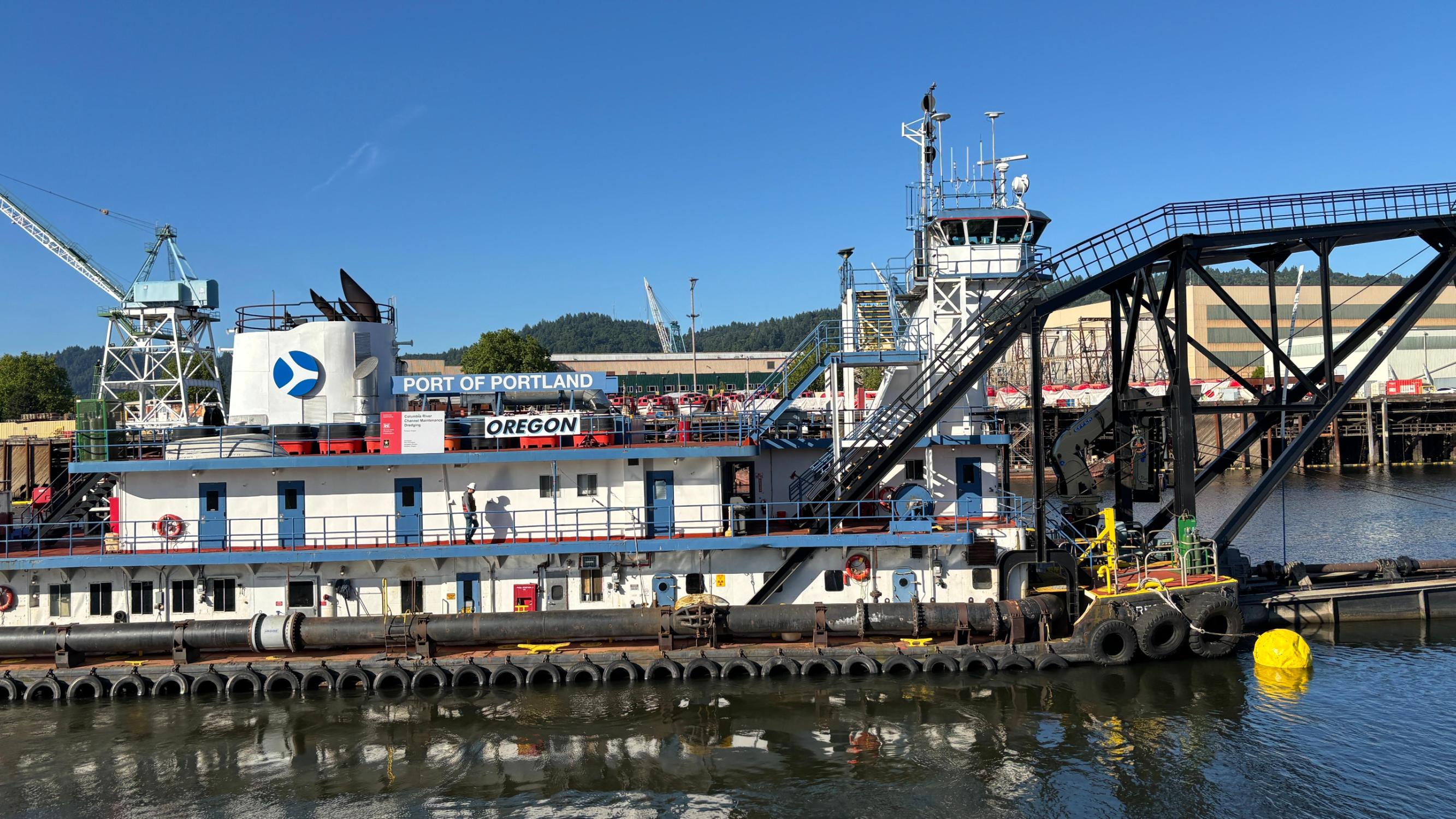
The 2026 dredging season begins today, as the Port of Portland’s Dredge Oregon launches on the Lower Columbia River to keep the navigation channel deep and wide enough for ships, tugs, and barges to safely travel.
This spring marks the first time the Dredge Oregon and the supporting vessel fleet are fueled by R99 renewable diesel, as the Port continues finding ways to improve the environmental performance of marine operations and improve local air quality.
Made from 99 percent renewable sources like cooking oils and animal fats and up to 1 percent conventional diesel, R99 renewable diesel burns cleaner compared to conventional fuel. Its use can cut greenhouse gas emissions by up to 80%, and it reduces particulate matter and other pollutants that affect regional air quality.
The introduction of R99 renewable diesel raises the bar for cleaner marine operations, and the Port is working with partners to find ways to make this fuel regularly available.
"This first delivery of renewable diesel to the Dredge Oregon is an exciting step forward on the Port’s path toward net zero carbon by 2050," said Port Chief Trade and Economic Development Officer Kimberly Branam. “This is evidence that access to sustainable fuels enables the delivery of critical services while caring for our environment and communities."
Also new for the Dredge Oregon this year is its tender, the Cowlitz, a boat that can push barges, segments of pipeline, and the Dredge Oregon itself.
"Replacing our decades-old tender with a newer model and newer engines will reduce emissions by up to 70 percent, which is good news for everyone in our region," said Don Tjostolvson, Director of Navigation at the Port.
Dredging the Lower Columbia River sustains Oregon’s role as a top U.S. exporter and supports trade for as many as 40 other states. Oregon ranks 10th nationally for exports as a share of GDP and exported nearly $28 billion in goods last year.
Our marine highways play an important role in making this possible, supporting the region’s economic health, creating jobs and ensuring ships can carry goods to and from our region – everything from imported tires, building supplies, consumer electronics, cars, and furniture to exported grains, produce, wood products, and hay.
"This work keeps commerce moving for our region and the nation, maximizing the volume of cargo we can safely accommodate on our river," Tjostolvson said. "Our crew works extremely hard to maintain the navigation channel, which supports thousands of businesses and jobs across the Pacific Northwest."
The annual Lower Columbia River dredging season begins after Memorial Day and continues through December. Each year, the Dredge Oregon removes well over a million cubic yards of material – mostly sand and gravel – built up along the bottom of the navigation channel to restore it to a depth of 43 feet and width of 600 feet.
In 2026, the vessel will move material at an estimated six sites between Portland and Astoria. This ensures oceangoing vessels can navigate the 106-mile-long channel between the Pacific Ocean and Portland.
How it works
The Port is contracted by the U.S. Army Corps of Engineers to dredge areas of the river where sediment has built up and made the channel too shallow for commercial vessels.
The dredged materials are either deposited elsewhere in the river, used to build up islands, including those used for wildlife habitat, or used to replenish eroded beaches along waterfront properties.
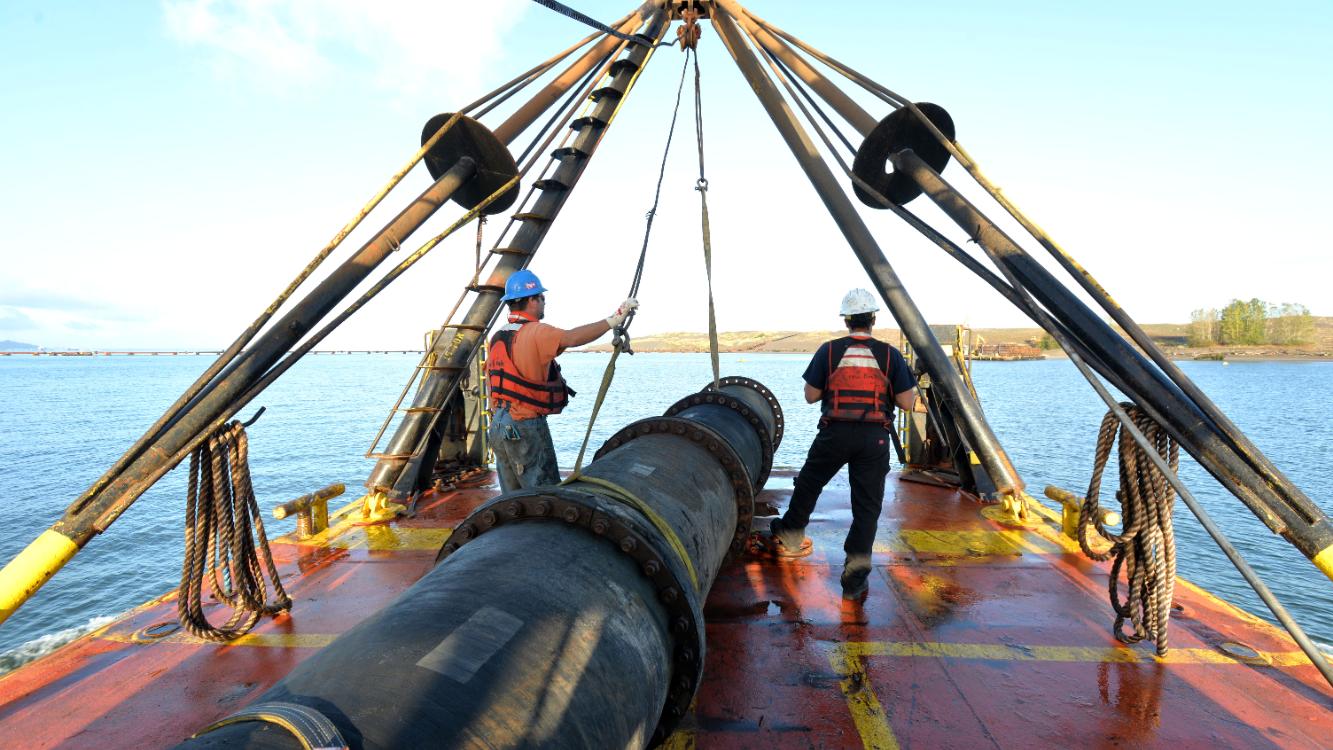
The Corps operates two of its own dredging vessels and typically contracts with others, but the Dredge Oregon is the only one that can both remove material from the riverbed and pipe it onto dry land or place it along beaches. Its pipeline floats on pontoons and can send materials over long distances – up to 2 miles away.
By the numbers
When it’s out on the river, the Dredge Oregon operates 24 hours a day, six days per week, with a hardworking crew of about 45 members.
This work is critical to the economic success of the entire network of 36 ports in the Columbia-Snake River system, as well as the nation. Even a 1-foot reduction in channel depth can cut vessel cargo capacity by $1 million to $2 million, restrict navigation, and trigger supply chain delays that ripple from Oregon to the Midwest.
In Oregon, 1 in 8 jobs is tied to international trade in goods or services, and companies export billions of dollars in goods and services each year. A majority of exporters – 88 percent – are small- and medium-size businesses.