Dredge Oregon wraps up season helping maintain the Columbia River for international trade
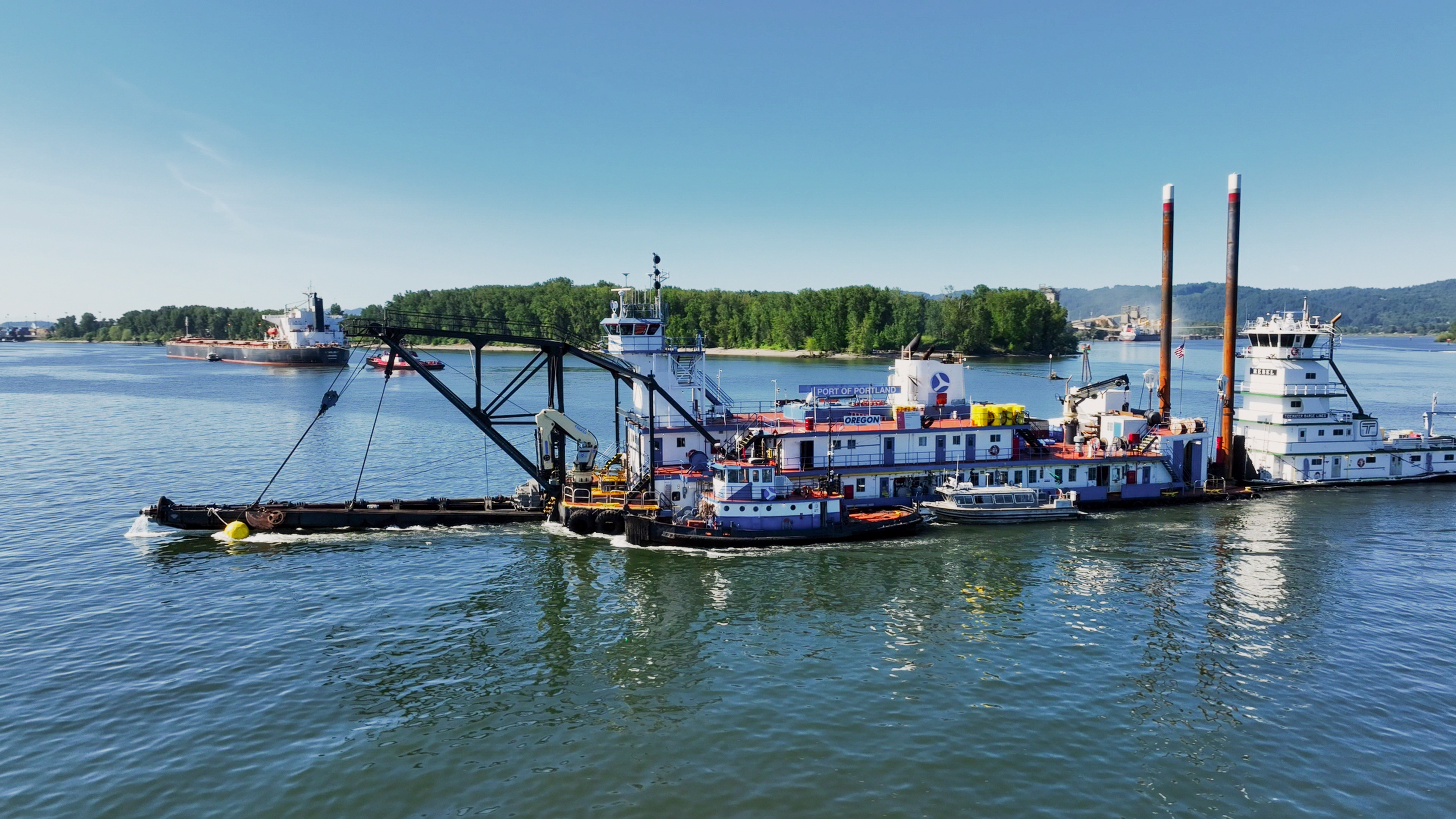
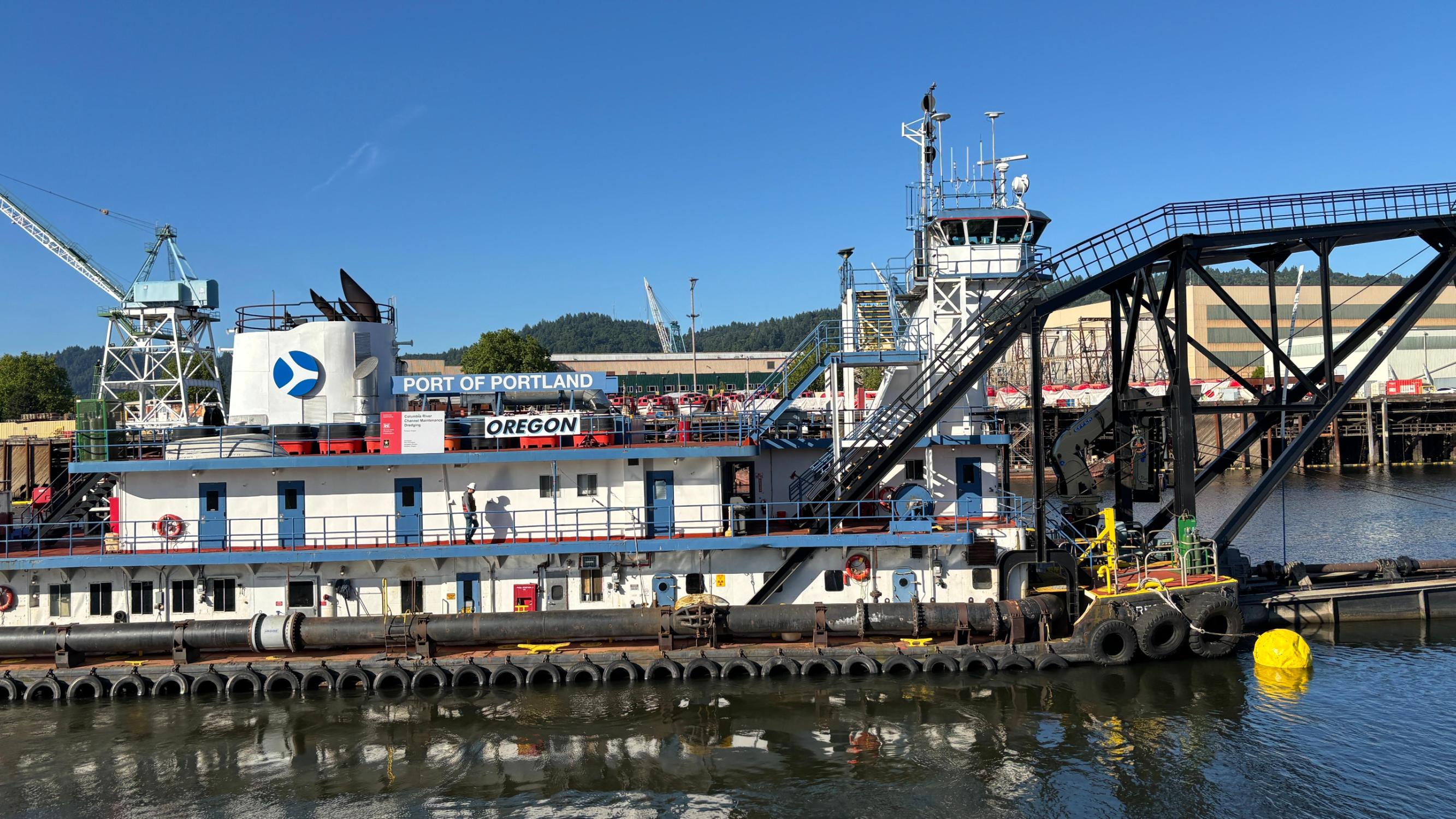
The Port of Portland’s Dredge Oregon is nearing the end of the 2025 season maintaining the lower Columbia River shipping channel between Portland and Astoria.
By the time the season wraps up on Thursday, Dec. 18, it will have scooped up and relocated 2 million cubic yards of sand to keep the channel deep enough and wide enough for ships, barges, tugs and other vessels to safely travel.
From May until December each year, the crew of the Dredge Oregon removes sand that has built up along the bottom of the navigation channel to restore it to a depth of 43 feet and width of 600 feet.
This work is crucial to thousands of local businesses and jobs in Oregon and beyond, because it supports international trade.
Our marine highways play an important role in supporting the region's economic health, creating jobs and ensuring ships can carry goods to and from our region – everything from imported tires, building supplies, consumer electronics, cars, and toys, to exported grain, produce, hay, and lumber.
How it works
The Army Corps of Engineers surveys the river throughout the year to find spots where sediment has settled and made the channel too shallow for commercial vessels; then, the Port, which operates the Dredge Oregon, dredges these locations throughout the season.
Known as a cutter suction dredge, the Dredge Oregon functions like a massive canister vacuum. The dredge uses a rotating cutter head – essentially a giant egg beater – to stir up and loosen material along the river bottom.
The sand is then sucked up into a 30-inch-diameter pipe and funneled to its final destination – whether it’s used to replenish eroded beaches, used to build up islands, or is deposited elsewhere in the river. It’s able to do this because it also has a pipeline, which floats on pontoons and can move materials over long distances – up to 2 miles away.
This step is unique to Dredge Oregon, the only vessel working on the lower Columbia navigation channel that both removes material from the river bed and pipes it onto dry land or places it along the shore. Dredged materials have been used to protect eroding properties, to build up islands for wildlife habitat, and to provide fill for developing places like Portland International Airport, Swan Island, Oaks Park, and the Nike campus.
When it’s out on the river, the Dredge Oregon operates 24 hours a day, six days per week, with a hardworking crew of about 45 members.
Why it matters
Maintaining the Columbia River channel is vital for international trade – ensuring vessels like container ships can navigate to and from Terminal 6, Oregon’s only active international container terminal, and to other ports throughout the Columbia-Snake River System.
Oregon is a trade-dependent state – one of just 11 states in the nation exporting more than it imports. Companies here export billions of dollars in goods and services each year, and a majority of exporters – 88 percent – are small- and medium-size businesses.
In Oregon, 1 in 8 jobs are tied to international trade in goods or services, whether in transportation, logistics, warehousing, manufacturing, or other connected industries. These jobs tend to pay significantly more than comparable jobs that aren’t connected to trade. In 2023, the average traded-sector job paid 12% over the state average.
The Dredge Oregon and its crew are critical to the economic success of not only the Portland area, but to the entire network of 36 ports in the Columbia-Snake River system.